BRT · METROBUS
The control room for your BRT corridor.
On a Bus Rapid Transit (BRT) or metrobus corridor, service runs by headway between vehicles, not by a fixed timetable, and depends on priority at junctions to hold commercial speed. NSS's PCC — Central Control Room is the ground-side platform designed to regulate that headway, track signal priority and deliver service information to every station.
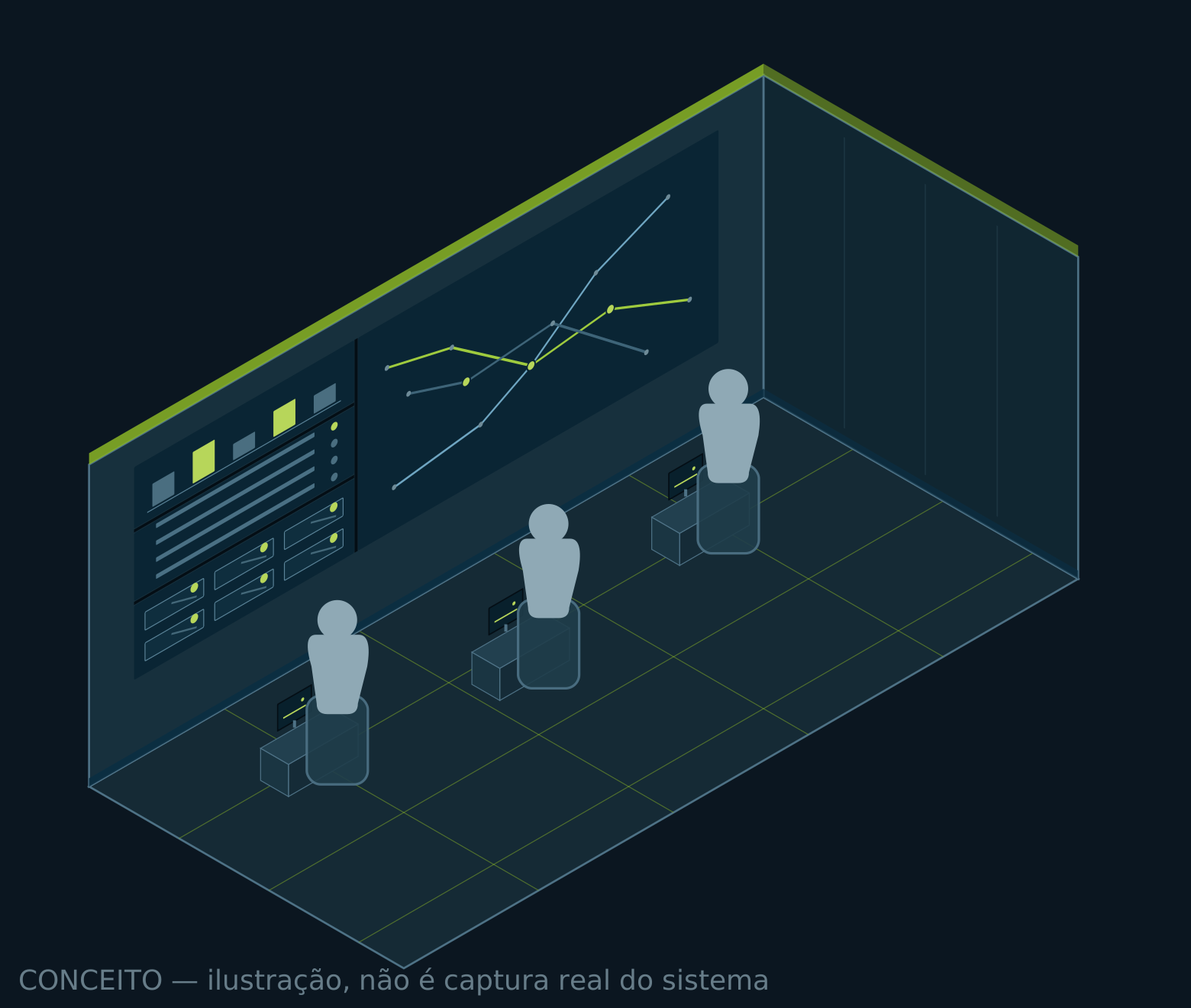
A BRT is not run by a fixed timetable.
On a BRT or metrobus corridor, vehicles run on a dedicated or partly segregated right of way, and what matters to the passenger is not the exact departure time but the wait until the next vehicle. Holding that headway — and the junction priority that supports it — is real-time regulation work, done on the ground. That is the work PCC was designed to do.
PCC on a BRT corridor
Headway regulation, not timetable
Detection of vehicles bunching and of gaps opening up, route by route, with headway risk forecast before passengers notice — so you can intervene while intervening is still cheap.
Transit signal priority
A record of priority requests at every junction and of what was actually granted, route by route, from the onboard equipment that makes the request to the traffic signal.
Station information
Stop and station panels managed from the same place as the operation, with spoken announcements in synthesised voice, with no library of recordings to maintain station by station.
Integration with the operator
A GTFS-RT vehicle position feed and a SIRI interface for mobility systems and third parties, and a documented API to connect PCC to the systems the operator already has.
What is described here is PCC, applied to a BRT corridor.
Headway regulation, signal priority and station information are a subset of PCC's capabilities. The full platform — planning, incidents, energy, video and reporting — is described on the PCC page.