DESTINATION INDICATORS
What we're best known for.
NSS's LED Destination Indicators are the preferred solution among transport operators in Portugal.
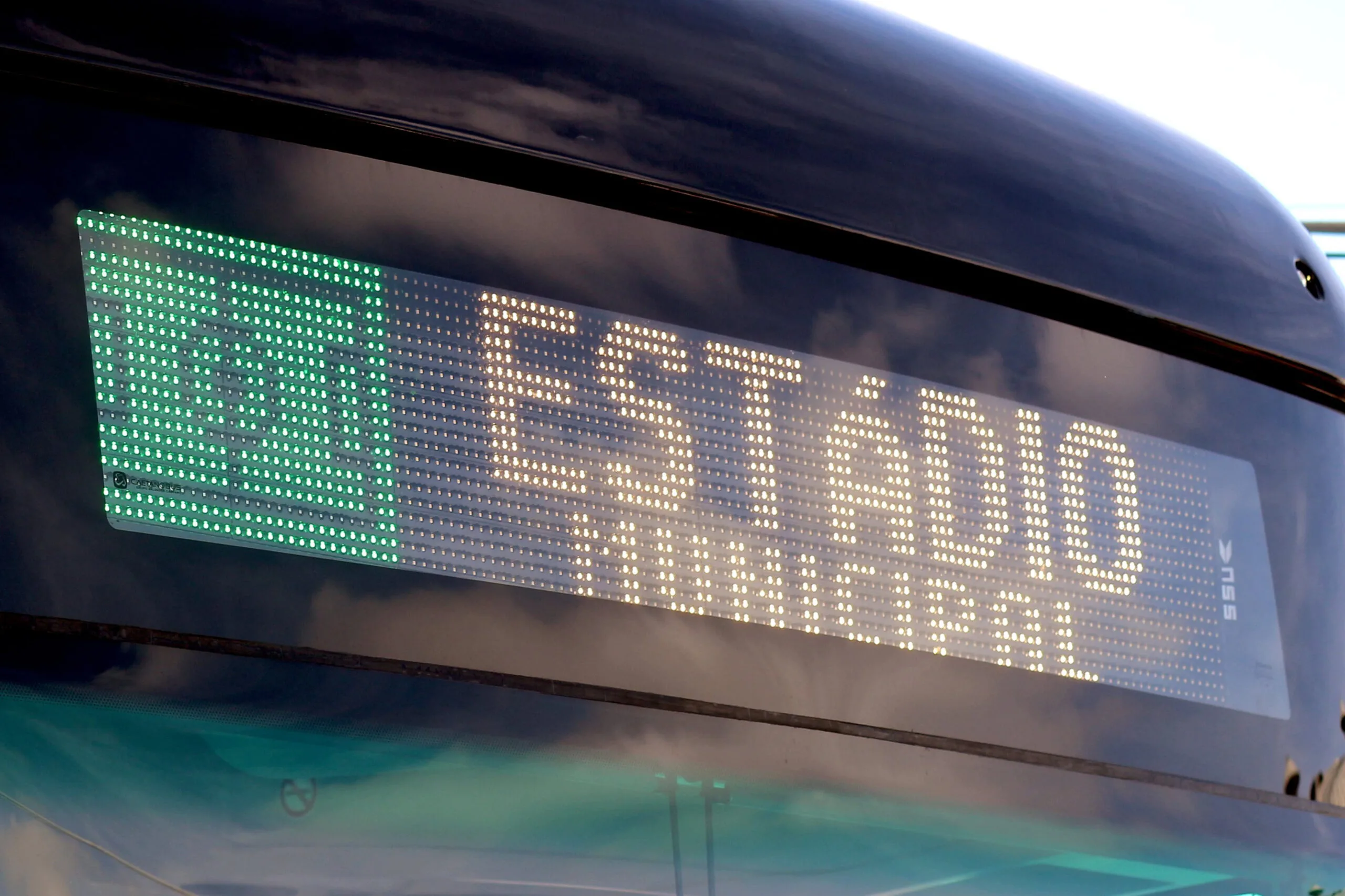
The new generation of destination indicators is coming.
With high resolution and cutting-edge technology, the new destination indicators deliver a clearer, more modern and efficient visual experience. Thanks to automatic brightness adjustment and a wide viewing angle, they ensure excellent visibility in any environment, regardless of lighting conditions. In addition, the high resolution, with a 7.62 mm pitch, guarantees fast, accurate and comfortable reading, even from long distances.
The SC762 range communicates over Ethernet, is compatible with the ITxPT protocol, supports WEBP, GIF and JPEG image formats and operates from -40 °C to +85 °C, on a 9–36 V DC supply.

Calculated brightness up to 11,900 cd/m²
Calculated luminance at the LED face, with no front sheet — among the highest in the category.

Redesigned
With a cleaner, more minimalist aesthetic.

Higher contrast
Polycarbonate finish ensures high contrast.

Enhanced readability
Automatic brightness adjustment and a 7.62mm pitch that significantly increases resolution.
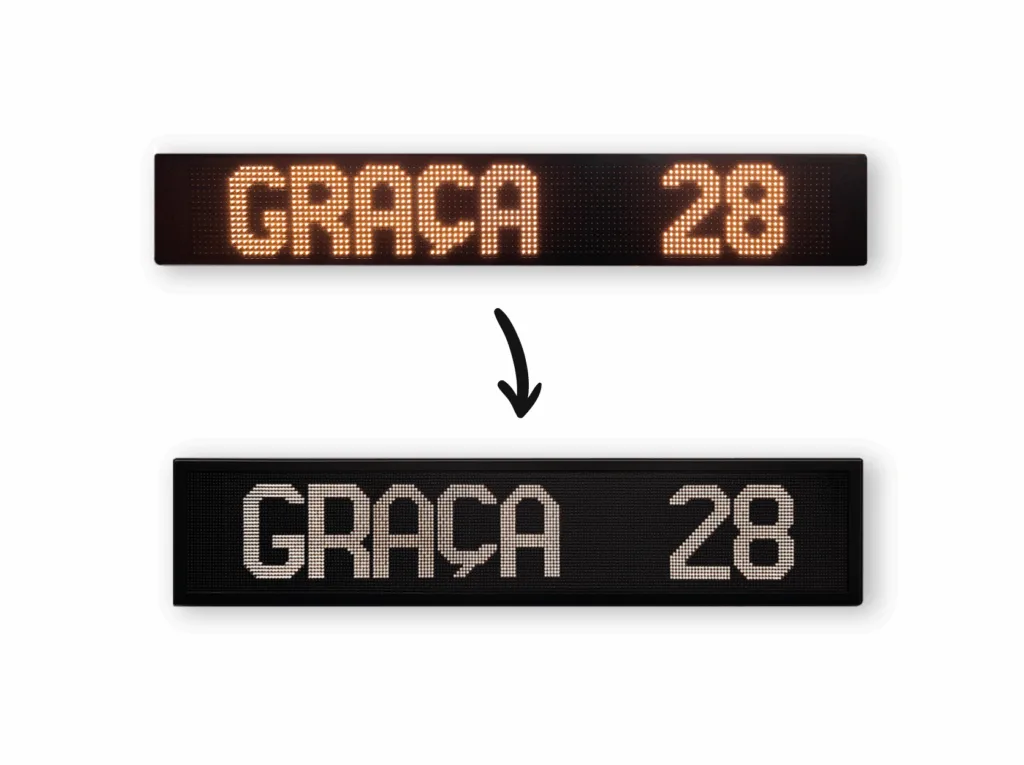
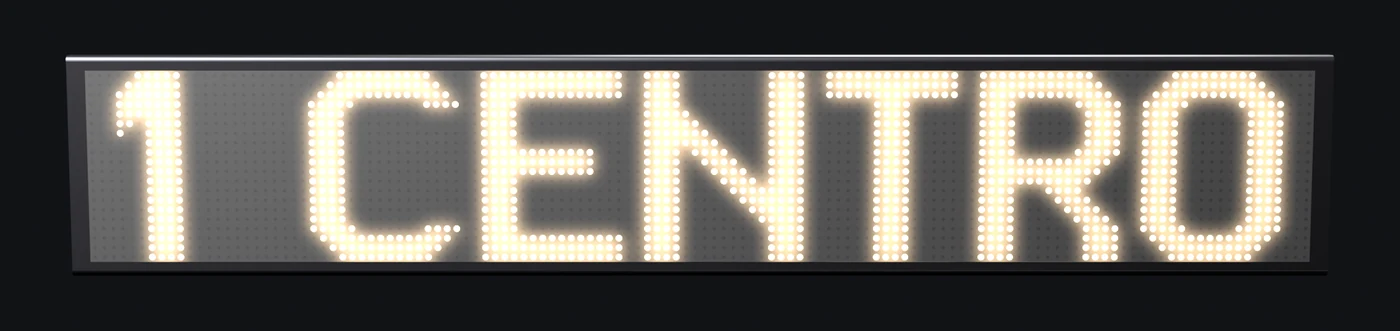
Render from the real LC-20.128 CAD; matrix in the product's real font; generic sample destination
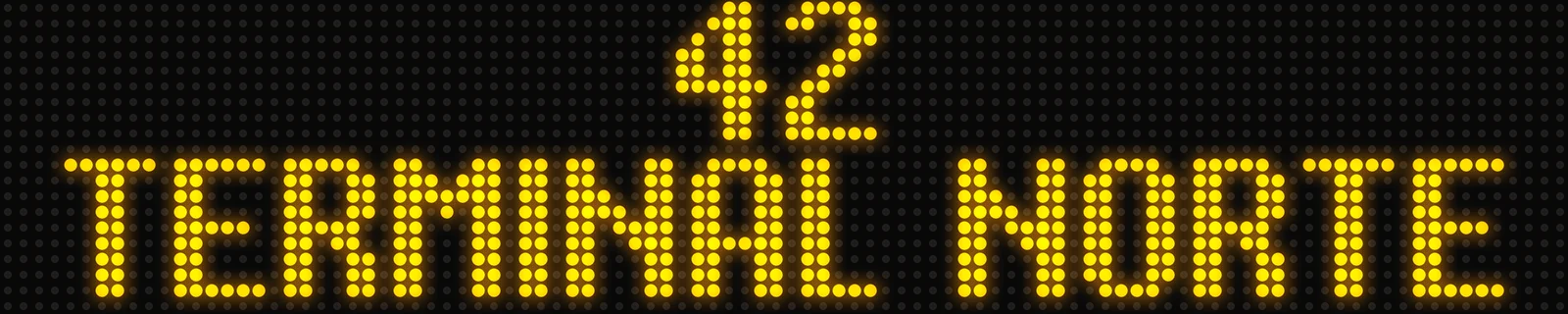
- LED destination sign composed in the NSS Editor (LC-20.128 matrix) — generic sample destination.
It's simple: if the destination isn't visible, the service fails.
Day or night, rain or shine, NSS LC (Light & Compact) panels deliver clear, reliable information, always on the move.
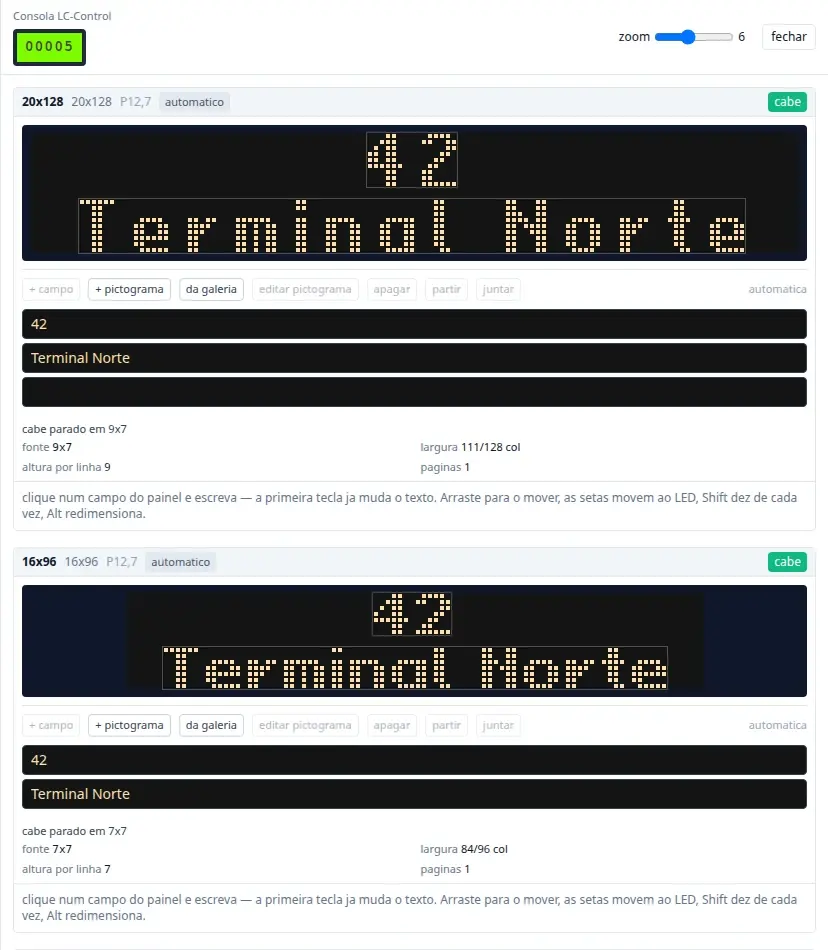
- NSS panel editor — real destination composition (3 indicators; route number on the left, destination on the right).
Real editor preview — the destination scrolls when it doesn't fit.
Previous editor, available for download
Anyone still running databases created in earlier versions of the editor will find the installers and the manual here.
Characteristics

Ultra-bright white LEDs — calculated luminance of 11,500 to 11,900 cd/m² at the LED face
Ethernet compatible with ITxPT, for SAE integration

Text editing directly from the console

Extended voltage range and low power consumption (9~36Vdc)
Lightweight aluminium case with ultra-slim design

120° angle of visibility
Automatic brightness control

Supports multi-language texts and images

Data transfer by USB
Or 2-wire RS-485, with no onboard switch required
Or IBIS protocol, for integration with existing onboard systems
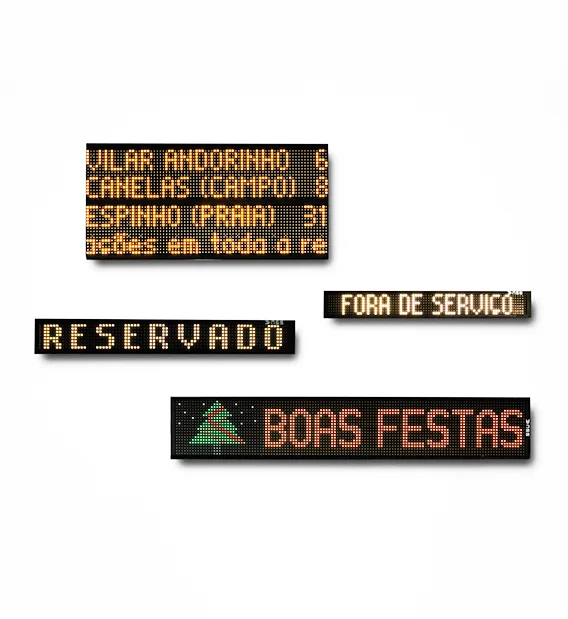
The LC range: front, side and rear.
LC panels cover the vehicle's three typical mounting positions — front, side and rear — on the same electronic platform and with the same communication options.
The most requested models, by position.
Within this range, three configurations cover most urban fleet requests.
LC-20.128 — Front Sign
20×128 LED matrix, warm white, full matrix. Dimensions 1675×295×32 mm (±1 mm), visible area 1625×255 mm. Maximum power consumption 162 W (all LEDs on) / 81 W (daylight) / 5 W (darkness). Supply voltage 9–36 VDC. Communications interface RS-485, Ethernet or IBIS. Black aluminium case, cable entry at the upper left corner.
LC-16S.112 — Side Sign
16×112 LED matrix, 10.16 mm pitch, warm white, full matrix. Dimensions 1270×203×32 mm (±1 mm), visible area 1135×163 mm. Maximum power consumption 76 W (all LEDs on) / 38 W (daylight) / 2 W (darkness). Supply voltage 9–36 VDC. Communications interface RS-485, Ethernet or IBIS.
LC-16.32 — Rear Sign
16×32 LED matrix, warm white, full matrix. Dimensions 456×244×31 mm (±1 mm), visible area 406×203 mm. Maximum power consumption 32 W (all LEDs on) / 16 W (daylight) / 1 W (darkness). Supply voltage 9–36 VDC. Communications interface RS-485, Ethernet or IBIS.
LC Control Unit Driver Console
Where the LC range runs without Ethernet/ITxPT integration, the LC Control Unit takes on the driver console's role: a 2-line × 16-character LCD display and a 16-key membrane keypad, for destination selection and diagnostics at the driver's position. Database update via USB pendrive. Supply voltage 9–30 VDC, maximum power consumption 5 W, RS-485 communication. Black ABS case, 190×80×54 mm.
FLEET DEPLOYMENT
Not a catalogue range. What's already on the road.
Every fleet we equip gets a destination configuration built around its routes, its stops, and the panel formats installed on each vehicle type. Over more than twenty years, we've built that experience in service across urban and interurban fleets, in a family of panel geometries for different vehicle types — from 8×32 LED rear panels to 20×160 front panels.
Urban and interurban
From a whole city network to a local operator's single route with half a dozen destinations. Same editor, same file format.
Mixed fleets
It's common for an operator to run five or six databases in parallel — one per vehicle type, because articulated, standard and midi buses carry different panel sizes. The editor handles every panel on a vehicle within the same database.
Continuity
Databases created in 2016 are still being edited and rewritten today by the same operators. The NSS Editor 2.7 .ub0 format has stayed compatible with indicators sold from 2016 onward.
Database and Free Software
NSS Editor is NSS's official software for creating and editing Destination Indicator databases. It runs on any Windows computer and is free. A single database configures every panel on a vehicle — front, side and rear — each with its own geometry; it creates destinations with a code and description, alternate messages that alternate with the destination in service, and rotating destinations at a rotation speed of your choice. Adjust font size and field spacing panel by panel, insert your own symbols and images, and export the full destination list for review. Saves in the .ub0 format, compatible with every NSS Destination Indicator sold from 2016 onward.

One database, every panel
Front, side and rear on the same vehicle, each with its own geometry, in the same database.

Preview available
Check how the information will be presented to the public before saving.

Multilingual
The information can be written in any language.
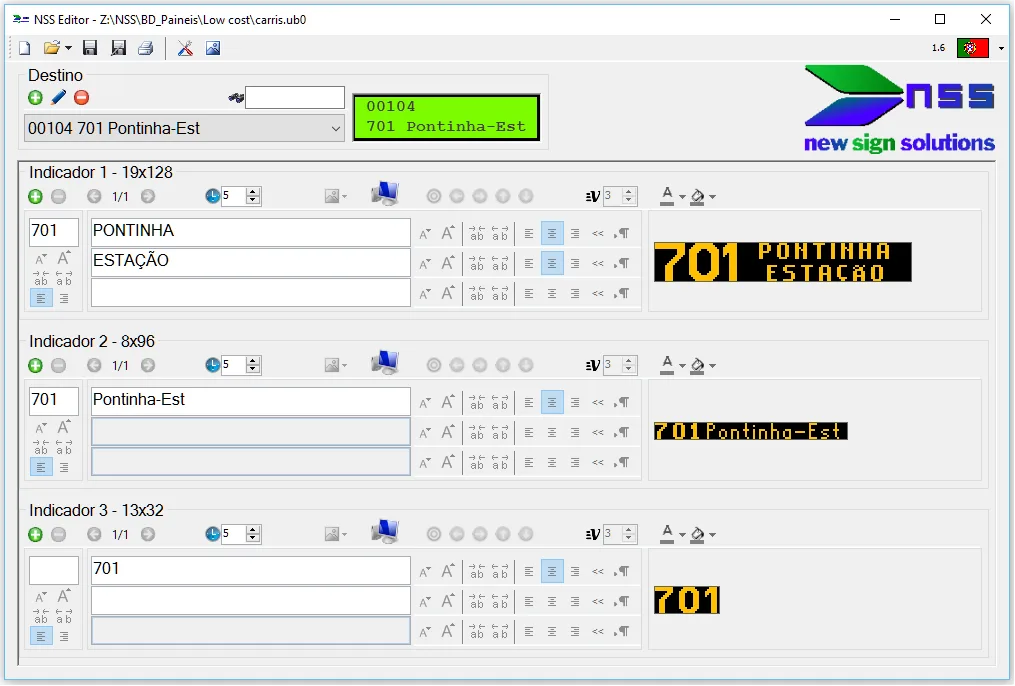
Inside the NSS Editor
Screenshots with a demonstration database — not a real operator's destination database.
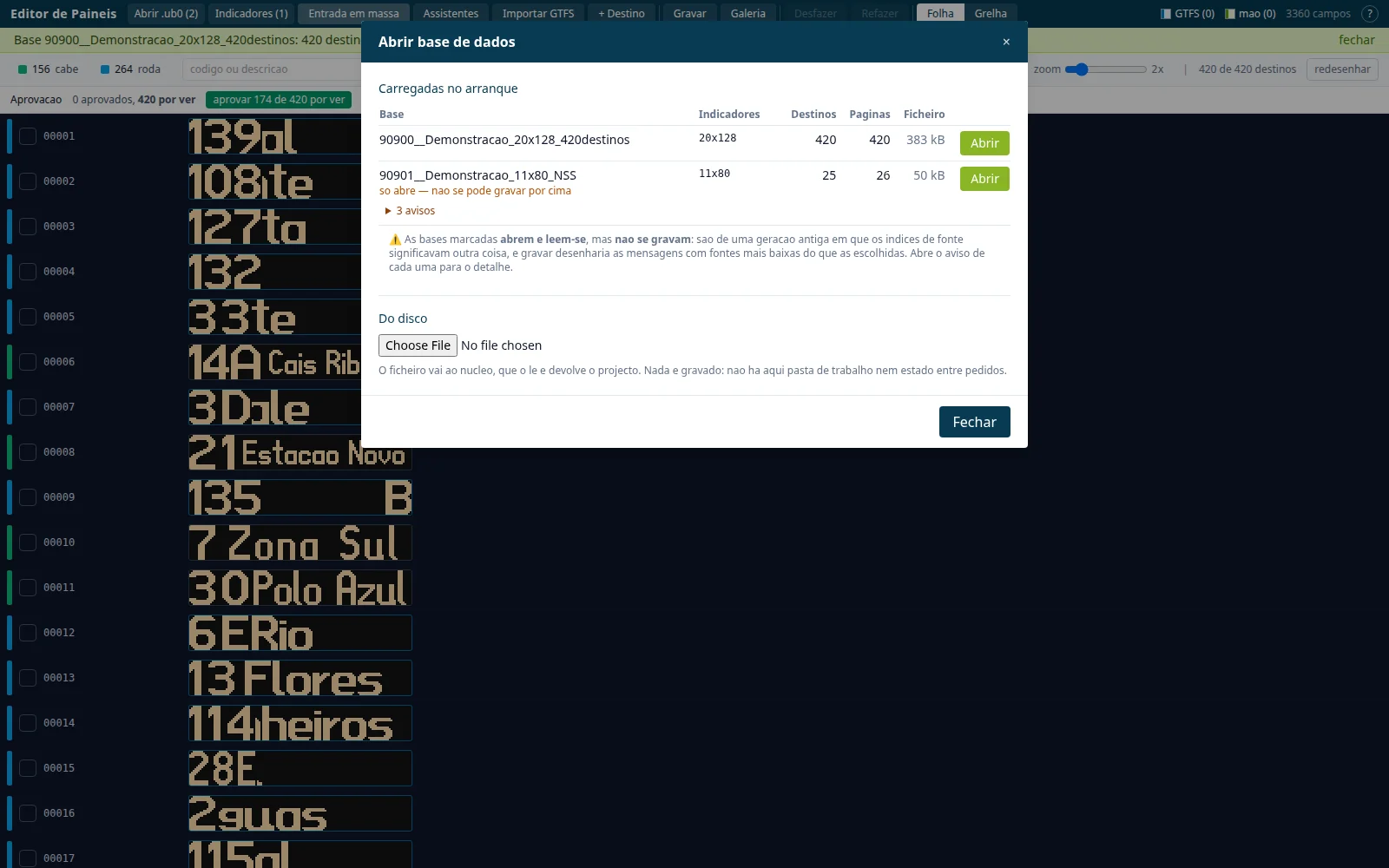
Database manager
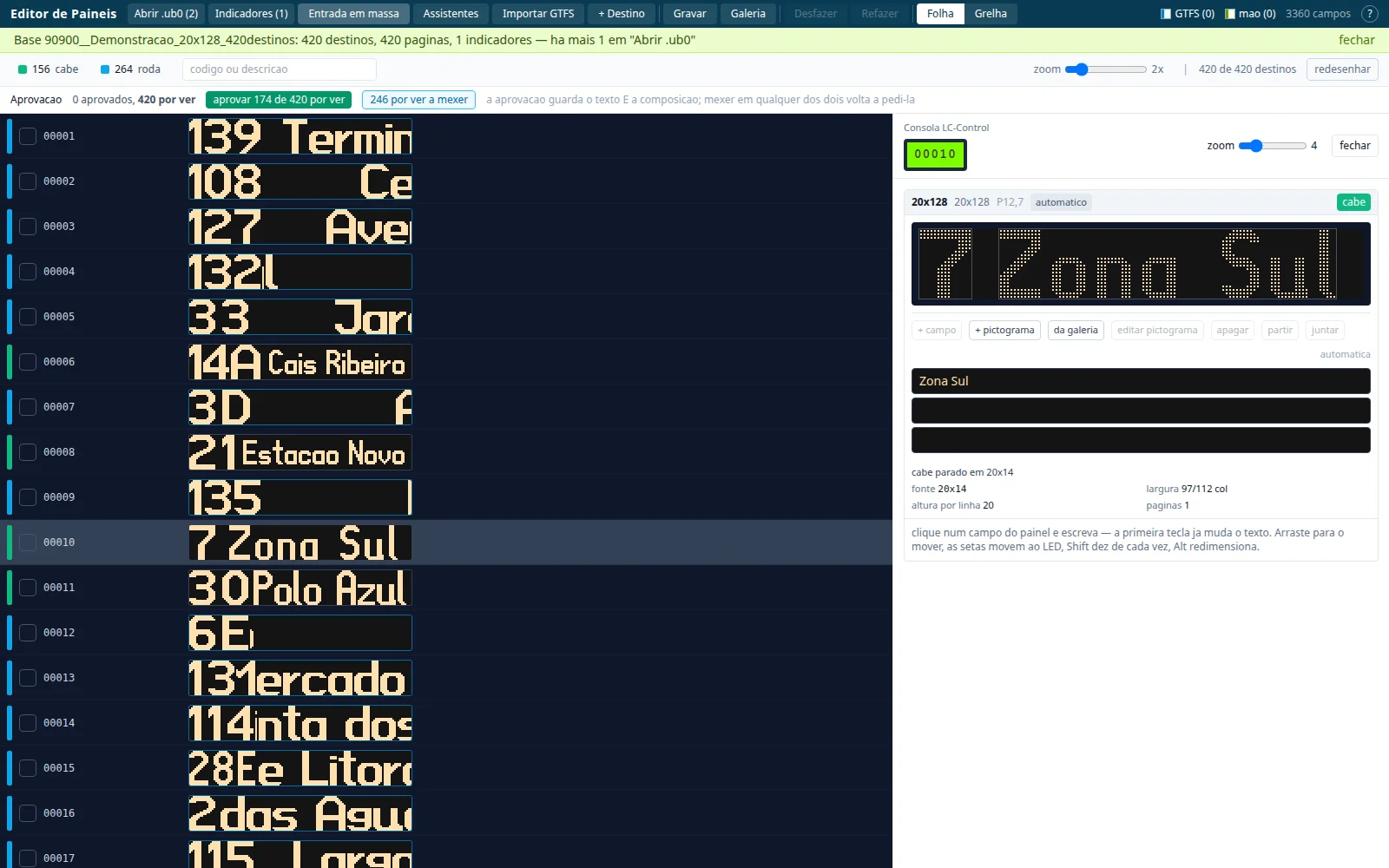
Editor with live preview
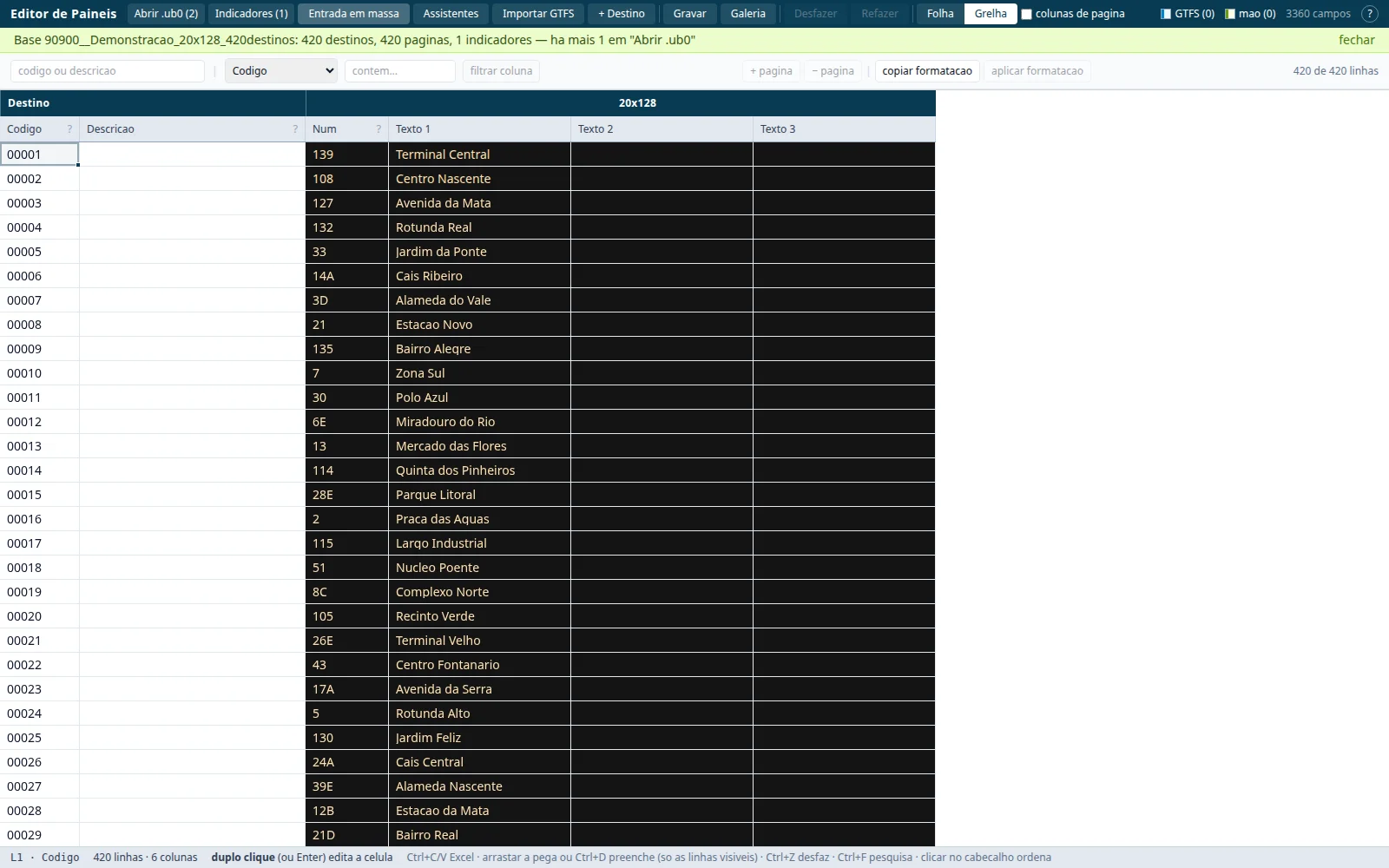
Grid view
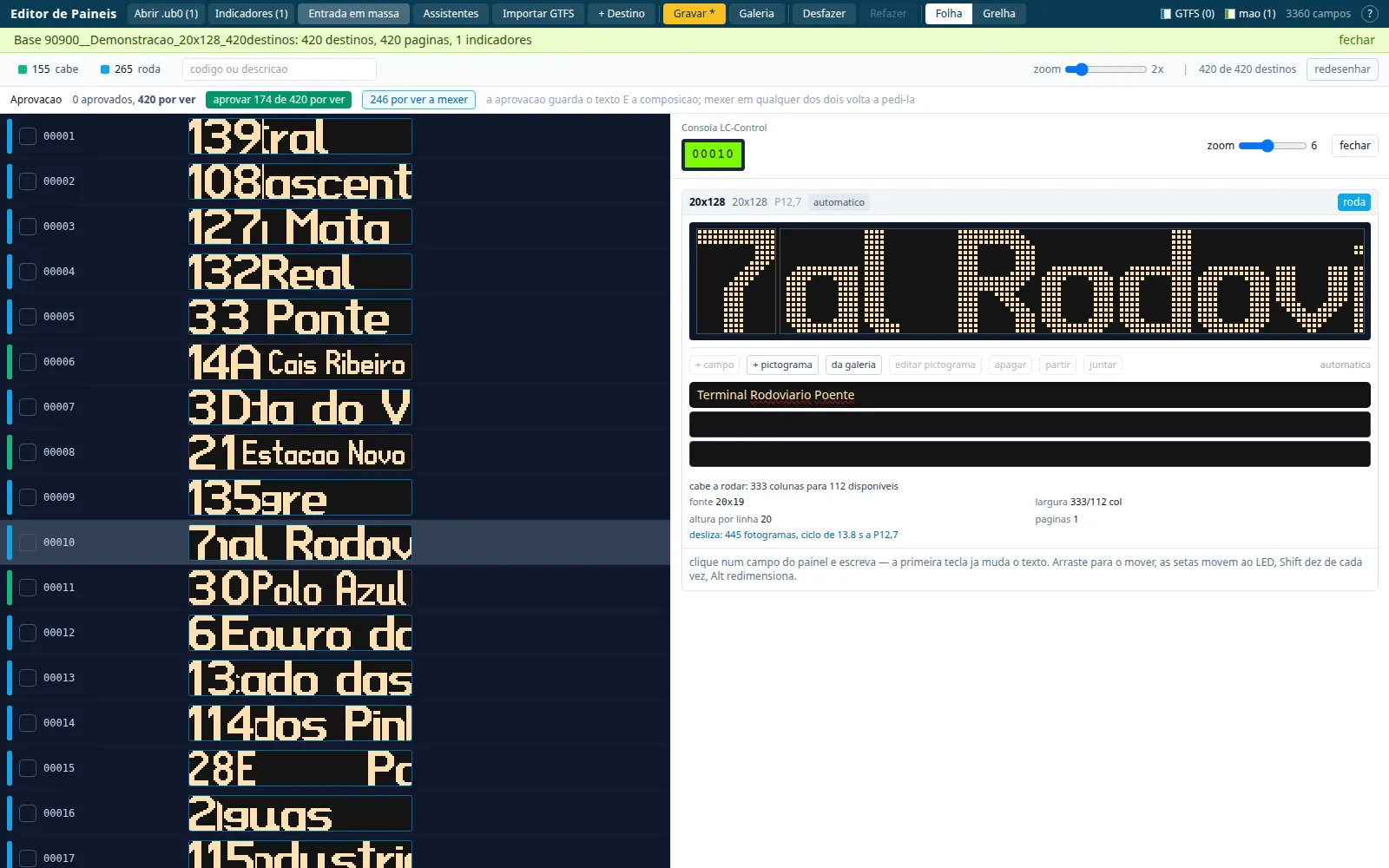
Field editing
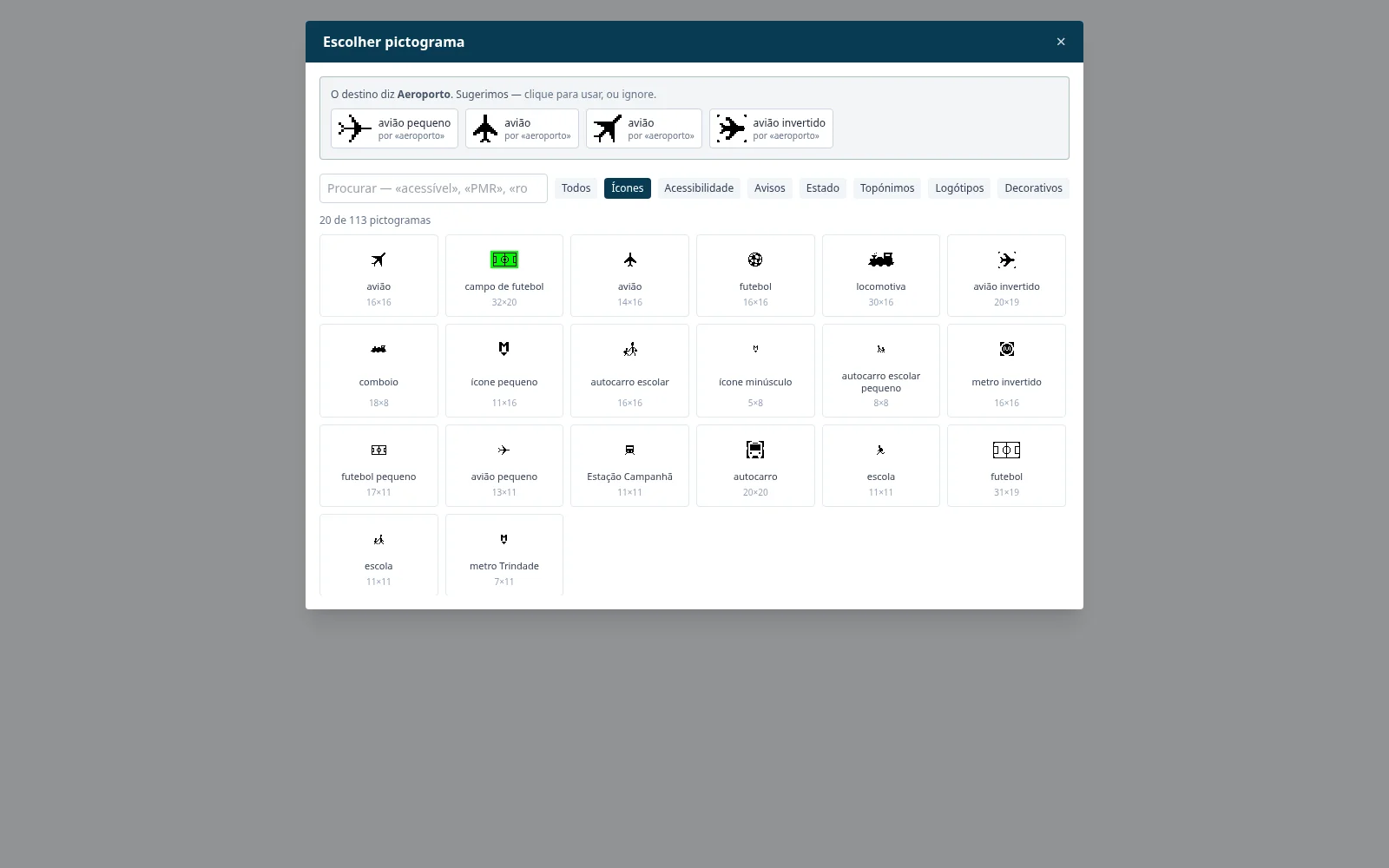
Pictogram library

UN ECE R10 Type Approval — IMT (SC762 range)
Electromagnetic compatibility type approval for road vehicles, issued by IMT (Portugal's Institute for Mobility and Transport) for the SC762 range — E21*10R06/02*0035*00, *0036*00 and *0037*00, 12-09-2025.
UN ECE R10 Type Approval — IMT (LC range)
Electromagnetic compatibility type approval for road vehicles, issued by IMT, for the LC range — LC-8.x, LC-8.x-C, LC-16.x-C and LC-20.x-C — and for the LC-Control console — 10R-050012, -050013, -050015, -050017 and -050023, since March 2025.