INSAT - INFOTAINMENT
Onboard screens to inform passengers in real time.
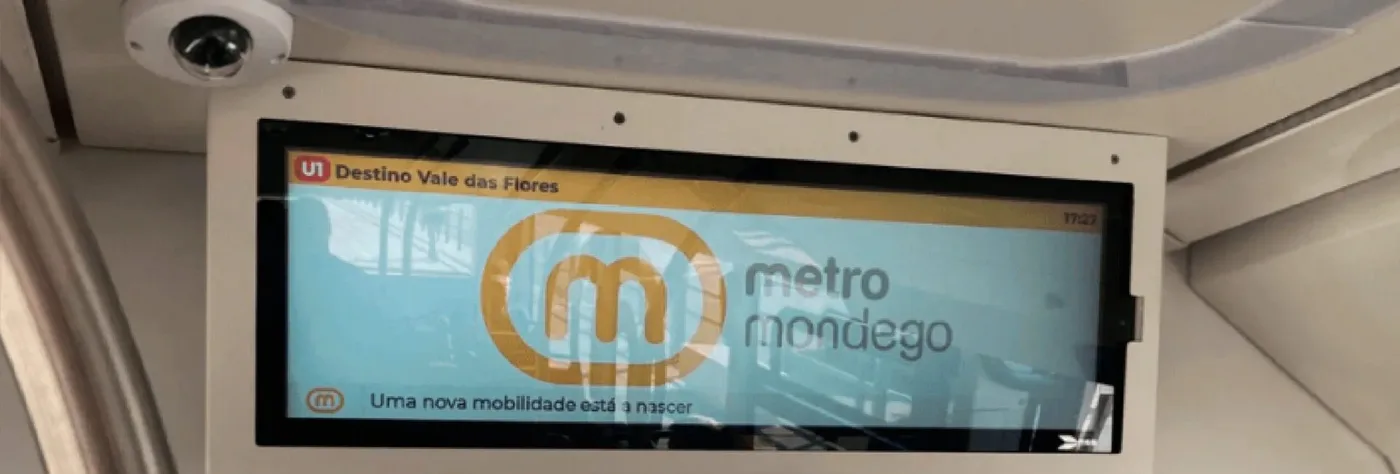
INSAT is an onboard infotainment system with next-stop announcements, multimedia content playback and remote monitoring. Available in several formats.
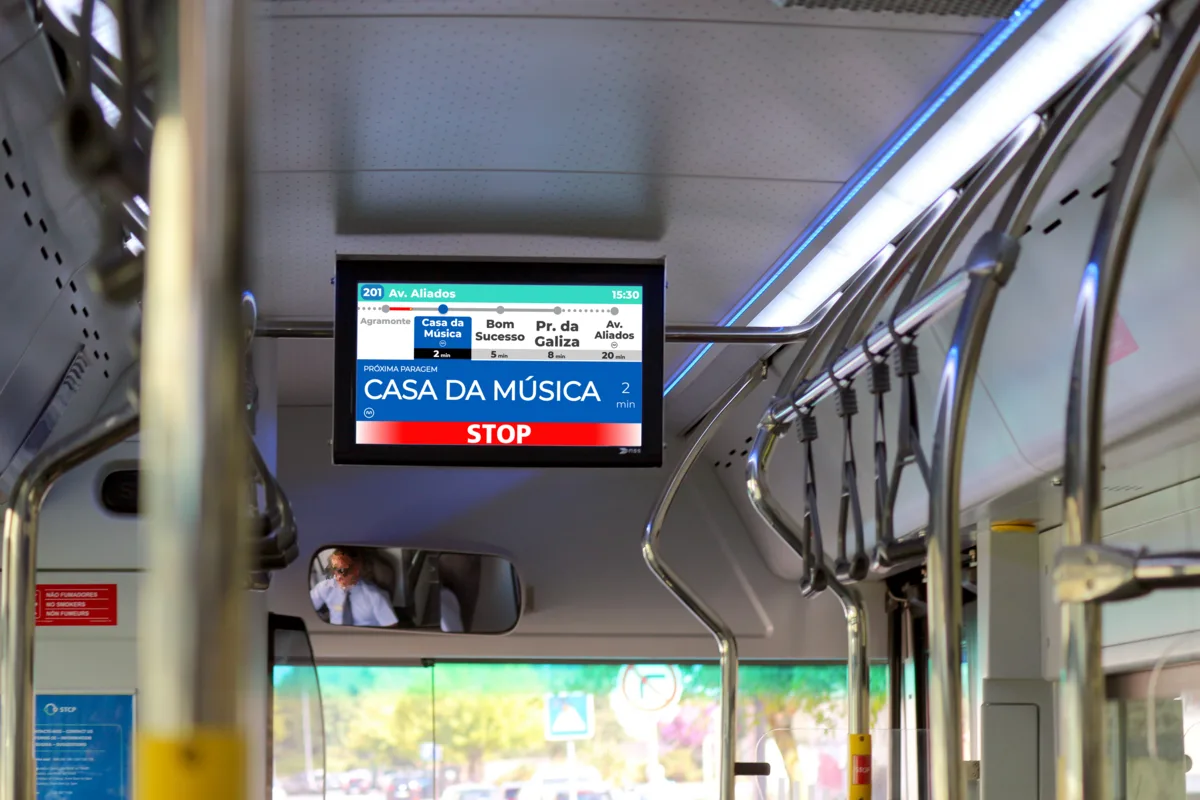
New vertical format, to fit where the horizontal one didn't.
Designed for vertical installation behind the driver's seat, it makes use of a space that is normally underused and ensures high visibility to passengers.

High visibility
1000 cd/m² brightness to ensure clear reading even in areas with high sun exposure.

Multi-zone screen
Allows the screen to be divided into several areas, displaying different types of information at the same time.

Dynamic content
Captures attention with animations, video, text and images.

Remote management
Fully integrated with NSS software, allowing content to be edited, scheduled and distributed in real time.


The models operators ask for most
The INSAT 21.5" and 29" combine the best of infotainment with advanced onboard management and communication tools.
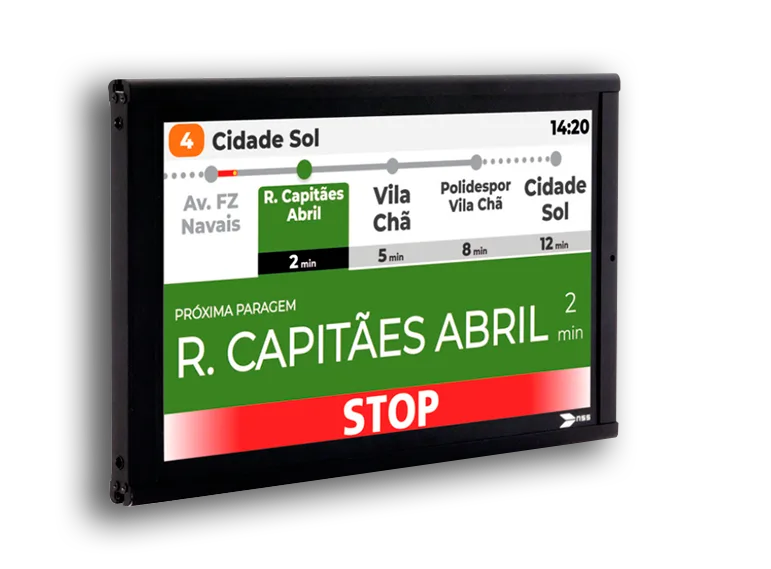
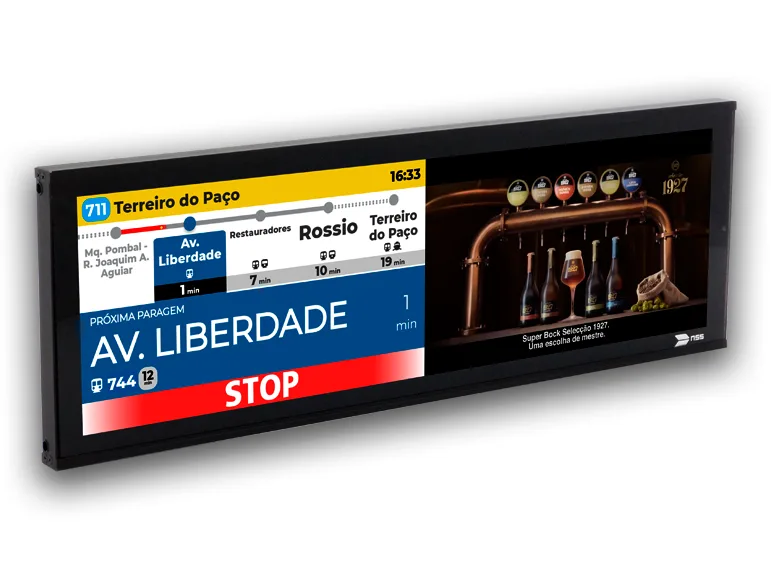
The onboard displays, in figures
INSAT 21.5"
21.5" LCD screen, 1920×1080, 1600 cd/m² brightness. Power supply 9–36 VDC, maximum consumption 50 W. Android, 8 GB available internal storage. Interfaces: TCP/IP RJ45, half-duplex RS-485, STOP signal and audio. Dimensions 551 × 340 × 74 mm (±1 mm); display area 477 × 268 mm.
INSAT 29"
29" LCD screen, 1920×540, 1800 cd/m² brightness. Power supply 9–36 V, maximum consumption 63 W. Android, 8 GB available internal storage. Interfaces: TCP/IP RJ45, half-duplex RS-485, STOP signal and audio. Dimensions 765 × 258 mm (±1 mm); display area 698 × 196 mm. An INSAT-29-610 variant is available, with 1920×610 resolution, 1000 cd/m², 65 W and 16 GB of storage, offering Ethernet, audio and STOP signal.
INSAT V32 — 32"
32" LCD screen in portrait format, 1920×1080, 1000 cd/m² brightness. Power supply 9–36 VDC, maximum consumption 60 W. Android, 8 GB available internal storage. TCP/IP RJ45 interface. Dimensions 448 × 756 × 56 mm; display area 390 × 695 mm.

UN ECE R10 Type Approval — IMT
Electromagnetic compatibility type approval for road vehicles, issued by IMT (Portugal's Institute for Mobility and Transport) for the INSAT 29 — E21*10R06/00*0031*00.
Ethernet or RS-485: the interface follows the installation.
Besides the Ethernet connection (TCP/IP RJ45), the 21.5" and 29" INSAT displays carry a half-duplex RS-485 port, a STOP signal input and audio — the connections needed to serve a two-wire RS-485 destination sign network without requiring an onboard switch. The INSAT V32 connects over Ethernet only, for vehicles whose onboard network is already fully IP. They are two different starting points for the same family, and the choice follows the vehicle's infrastructure.
Travel information
Route • Destination • Next-stop display • Estimated arrival times • Connection interfaces
Compatibility
ITxPT • Proprietary API for feature expansion • Integration with Web services • Adaptation to the customer's SAE
Audio announcements
Audio announcement of the next stop, with no need for prior recording • Multi-language support

Monetisation
Advertising targeted to specific zones of the network • Reach across a high daily passenger volume • A new revenue stream for the operation
Multimedia playback
Remotely managed content • Video and image playback • Content scheduling and geo-targeting

Other information
Connection to the vehicle's STOP signal • News feed • Service changes • Synchronised time information
CONCEPT — illustration of the function, not a real capture of the system
One portal. Your whole fleet. Total control.
NSS provides free software that lets you create, edit and organise content, and even preview it. All in a simple, fast and cost-free way.
 Direct access via web portal
No installation required.
 Fleet segmentation by group
Segmented management.
 Real-time monitoring
Always know what's on air.
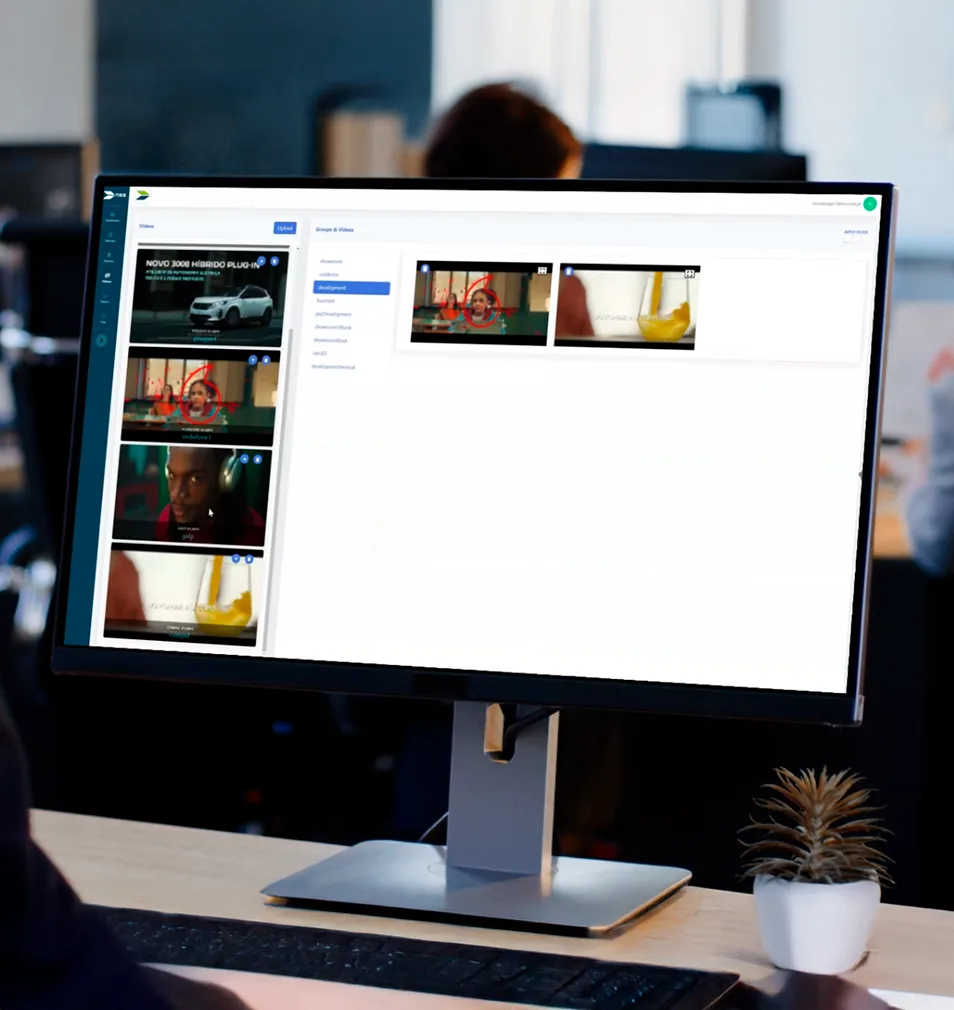
 Multimedia content management
Edit, publish, preview.
 Geo-targeting and scheduling
The right content, at the right time.
 Lifetime support and warranty
Continuous support, at no extra cost.
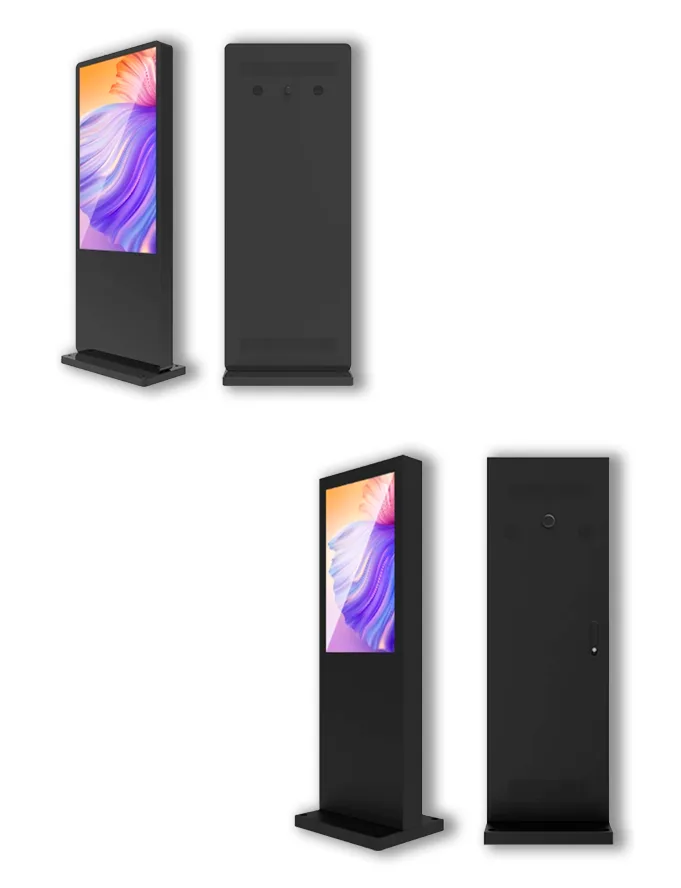
Urban technology: Now also available in MUPI format.
More than information, presence. NSS digital MUPIs bring the same remote content management principle used on the onboard displays to the street and public space — an outdoor-rated structure, high brightness and real-time communication.

Several sizes available
Models in 32", 43", 49", 55" and other formats to adapt to different operational needs and installation sites.

Guaranteed visibility
Adjustable brightness up to 4000 nits, ensuring perfect legibility in any lighting conditions, including direct sunlight.

Interactive or static models
Available with touchscreens for user interaction or display-only options, ideal for informational communications.

Robust structure
Lightweight, robust and corrosion-resistant construction, ideal for outdoor environments and built to withstand the demands of urban spaces.

Versatile connectivity
Equipped with USB ports, HDMI, RJ45 input and SD slot, making it easier to integrate with other technologies and data sources.

Remote content management
Real-time updates and control over the network, with the option of using a 4G module where no Wi-Fi is available.
More than screens: a portal that controls the whole fleet.
Behind every INSAT unit is the same free management portal — a complete view of the fleet from any browser, monitoring of every unit, and usage reports, all in one place.
Dashboard with key indicators
Total number of units, videos and files being displayed, percentage of units online, and fleet distribution by group, all on a single screen.
Instant search across the whole fleet
Lists of hundreds of vehicles organised by group, with drag-and-drop reorganisation and a destination database linked to each one.
Remote diagnostics per unit
Connection status, activity and current destination of each INSAT, with real-time screen preview — with no need to visit the bus.
Usage reports
Playback counts by vehicle and by content, with trends over time, to evaluate campaigns and optimise operations.
Every piece of content, at the right time and in the right place.
Display rules configurable down to the last detail, so that every video, advert or notice only takes up the screen when it makes sense for that passenger.
Detailed scheduling
Date range, selectable days of the week and up to three time windows per day, with a configurable number of repetitions per cycle.
Zone-based geofencing
Restriction to a specific geographic area or to a fleet group, so that content only reaches those it's relevant to.
Context-aware
Filtering by ambient temperature and playback priority, with no manual intervention required on the ground.
Synchronised onboard voice
Automatic next-stop announcement, synchronised with the vehicle's real position on the route — with no need to record or maintain a stop-by-stop audio bank. Available in Portuguese and English.
Footer notices, in seconds
Strike notices, route changes, delays or event messages published on the portal reach the screen footer within seconds — across the whole fleet or just one group, with quick pause and removal.
Destination database, always up to date.
INSAT acts as the gateway for the onboard destination indicator network, distributing databases to the whole fleet without any depot visit.
INSAT OUTDOOR
The INSAT family also lives on the street: outdoor LCD screens.
Complementing the digital INSAT MUPIs, the NSS LCD Outdoor range brings the same principle of real-time information and communication to stops and public spaces. Available in several sizes — 32", 43", 49" and 55", among others — in interactive or static versions, with an optional 4G module for locations without a fixed network or Wi-Fi.
The INSAT Station — the totem NSS installs at stations, terminals, interchanges and stops, with optional 4G router, air-quality monitoring and audio announcement modules — is described on the Smart Cities page.
Durability you can see and feel
Impact protection
6 mm tempered glass, ideal for outdoor environments.
Cooling or air conditioning
Cooling or air conditioning system.
IP65 protection rating
Resistant to water, dust and external agents, per datasheet specification.
Aluminium structure
Lightweight, robust and corrosion-resistant.
Performance and technology
Adjustable brightness up to 4000 nits
Guaranteed visibility in any lighting conditions.
Android or Linux operating system
Simple content management.
Efficient performance
Different performance tiers, up to 4 GB of RAM and 32 GB of storage.
INSAT RAILWAY
The INSAT family also equips the rail environment.
For rolling stock, the NSS MRW range extends the INSAT family with high-brightness open-frame monitors, resistant to vibration and shock, with EN 50155 and EN 45545 as reference.
The MRW range
MRW101 — 10.1 inches
TFT LED screen, 1280×800 resolution (16:9). 1000 nits brightness with automatic adjustment, 800:1 contrast. Dimensions 282.7 × 195 × 44.4 mm.
MRW133 — 13.3 inches
TFT LED screen, 1920×1080 resolution (16:9). 1000 nits brightness with automatic adjustment, 800:1 contrast. Dimensions 339.6 × 211.2 × 39.2 mm.
MRW215 — 21.5 inches
TFT LED screen, 1920×1080 resolution (16:9). 1000 nits brightness with automatic adjustment, 800:1 contrast. Dimensions 553 × 340.4 × 57 mm.
MRW27 — 27 inches
TFT LED screen, 1920×1080 resolution (16:9). 1000 nits brightness with automatic adjustment, 800:1 contrast. Dimensions 684 × 425 × 80 mm.
RAIL PC PANELS
When the screen is also the onboard computer.
The PPCRW rail PC panel range combines a screen and a computing unit in a single open-frame device, with the same mechanical and thermal ruggedness as the MRW monitors, and the same EN 50155/EN 45545 reference — ready to run onboard applications in rolling stock. The two models differ in more than just size: their interface sets differ, and that is what the choice turns on.
PPCRW104 — 10.4 inches, with field interfaces
This is the model that keeps the connections to local equipment: 2× RS-232/485, 4× accessible USB 3.0 Type-A, 1× VGA + 1× HDMI for a second screen and MIC + SPK audio, alongside 2× Ethernet (M12 X-Code) and 4-channel digital I/O (M12 A-Code). 10-point PCAP touchscreen, 1024×768. Intel N95, 8GB DDR4 RAM, 256GB storage, Windows 10/11 or Linux. Dimensions 254 × 221.2 × 78.9 mm.
PPCRW133 — 13.3 inches, everything over Ethernet
It drops the serial ports and the video outputs: what remains is 2× Ethernet (M12 X-Code) and 4-channel digital I/O (M12 A-Code), with 2× internal USB 3.0 — for vehicles whose onboard network is already fully IP. In exchange, it is the one that scales: 1920×1080 screen, configurable Intel Celeron J6412, N100, i3, i5 or i7 processor, 8GB DDR4 RAM up to 32GB and 256GB up to 1TB of storage, AMI UEFI BIOS, Windows 10/11 or Linux, continuous 24/7 operation. Dimensions 343.5 × 214 × 57 mm.

EN 50155 (reference)
European standard for electronic equipment in rail rolling stock, covering resistance to vibration, temperature variation, humidity and electromagnetic compatibility — reference for the entire MRW and PPCRW range; NSS holds no test report or certificate of its own for these products.
EN 45545 (reference)
European standard for fire protection in rail vehicles, defining the fire reaction and smoke emission requirements for materials used inside rolling stock — reference for the entire MRW and PPCRW range; no test report or certificate of NSS's own.
CE · FCC · IEC · RoHS · EAC (manufacturer)
European Conformity (CE), Federal Communications Commission (FCC, USA), International Electrotechnical Commission (IEC), Restriction of Hazardous Substances (RoHS) and Eurasian Conformity (EAC) — marking of the manufacturer of the modules making up the MRW and PPCRW range, as declared in their data sheets; NSS does not issue its own Declaration of Conformity for these products.